1. Context
- Literacy Awareness and Sensitivity workshop with a large organization that provides recreational and community programs. The staff participants were from a summer program for pre-teens and their parents.2. Description of the Event
(organized as per. Social Practice theory building blocks)
Participants
- 10 program workers who will be working directly with the children and their parents and the program coordinator who requested the workshop. The literacy specialist facilitated the workshopSetting
- Meeting room at the centre, participants sat at tables that were organized in a U shape. The workshop took place during their regular team meeting, and the workshop was approximately 100 minutes in length.Domain
- Institutional public services: This centre is part of a large organization that has a number of centres at various locations in Calgary. The organization offers recreation, sports and leisure services for adults and families.Resources
- Participants' prior knowledge and experience with this program. All participants had post-secondary educationActivities
- Warm up exercise: Facilitator asked "What do you know about Literacy?" and wrote on flip chart the responses from individual participants3. Method
- Preparing for the workshop, as it would be a case study included getting participants to approve my use of the workshop for this course.
- Organizing the interview and creating interview questions was beneficial to get another route to collect data, and to think about what questions would be useful. I purposely had the interview after the workshop as it could also serve as an opportunity for feedback about the workshop. Interview questions included:
- Being in a dual role of workshop facilitator and observer was at times difficult and at times I did compromise observation for facilitation as I felt that providing a well facilitated workshop was more important than my needs for the case study.
- Having the questions as a guide to write the case study also helped with reflecting on the event.
4. Reflections and Analysis
- The intended outcome of this workshop is that participants will know more about literacy, be more sensitive to literacy issues, and can respond respectfully to people with limited literacy skills. During the workshop participants displayed an increased sensitivity to literacy issues by sharing their thoughts and feelings both personally and professionally, and most importantly accept their responsibility as community services providers to reduce literacy barriers.
- From the interview after the workshop, I learned that staff members continued to explore ways to make changes in how they delivered the services of the program, and that they felt passionate about reducing literacy barriers in their program.
- During our group work in the course in Newfoundland, I found it very helpful to identify themes that were embedded in my case study. They were not apparent before being in the course. The themes in my case study included: learning, a means of reflection; making change; humanizing and demystifying; negativity, obstacle; and, public, institutional. I would also add the theme of stereotypes, myth makers. I think the process of sharing very different case studies and then together surfacing the themes was extremely important in seeing literacies as social practice.
- Because these workshops are quite central to my work, a key question I now have from doing the case study within the context of this course is: What can be done to change the ways in which literacy publicity frames "the problem" of adult literacy? I feel like the myths and assumptions about adult literacy keep this issue isolated and invisible. In my work, when people become aware of it, it is located with individuals (it is her or his problem) and not viewed as a social issue. It is also viewed, at first sight, from a deficit model perspective rather than seeing the strengths and diversities of people living out their lives everyday.
5. Relevance
- Learning about case studies has deepened my understanding of literacy practices and I intend to transfer this learning to a follow up project to "Connecting Literacy to Community" which is about developing curriculum and practicum on doing literacy community development work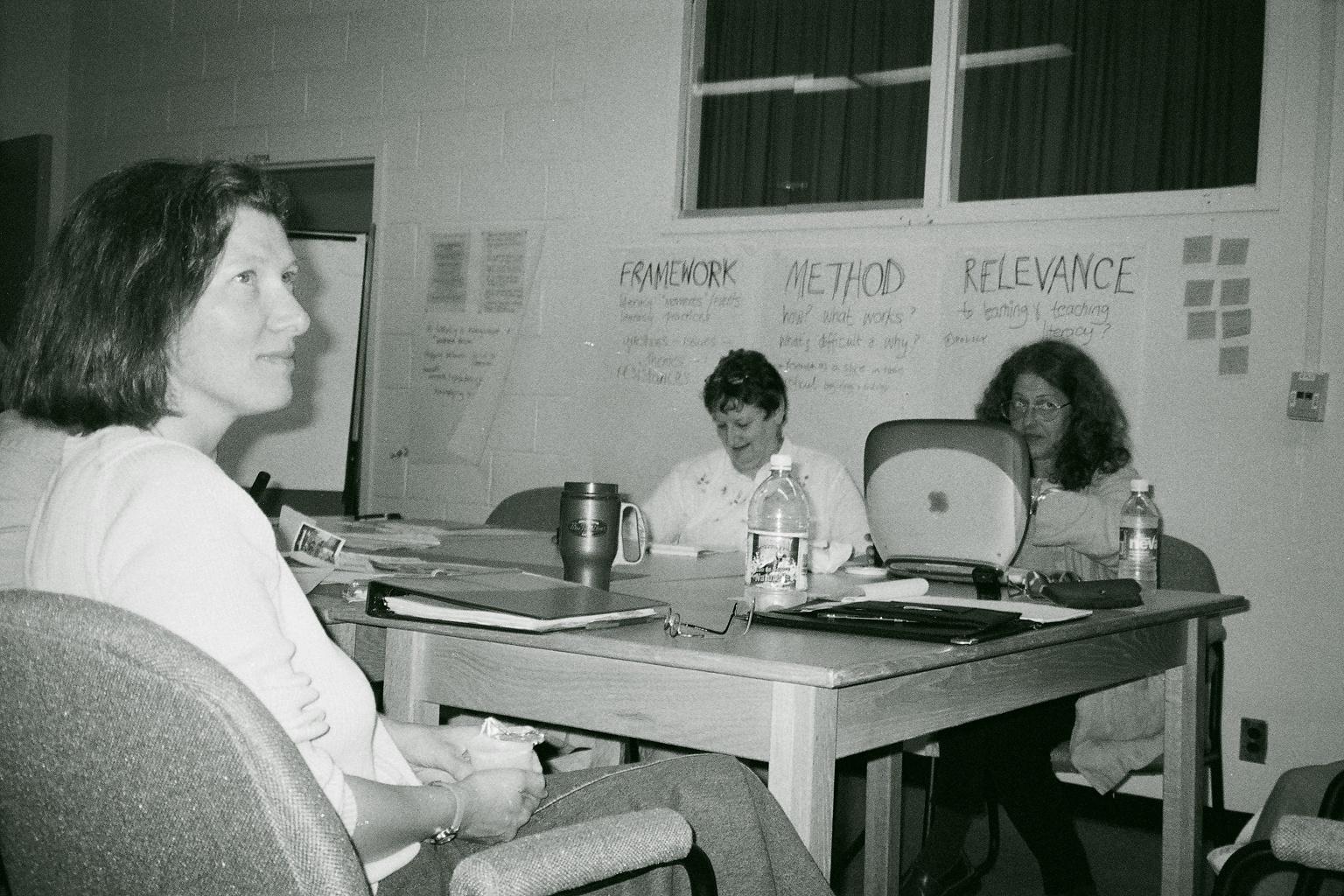
Audrey (far left), Helen and Janet
Audrey Gardner can be contacted at agardner@bowvalleycollege.ca
back to Newfoundland course overview
page created 8 July, 2003
updated 11 July, 2003